
New Haven VINELink Arrest Coverage
Connecticut Judicial Branch victim resources describe VINE as a free and confidential automated notification service. Older state publications referred to it as CT SAVIN. Today the entry point is the Connecticut VINE portal. The portal draws on adult criminal court records and Connecticut Department of Correction data. A Milford arrest can surface there once a case lands in Ansonia-Milford court. It can also appear once a person enters DOC custody. VINE works best with a known case. It also suits someone already inside the court or state correctional system.
New Haven County runs its arrest records differently than many places. There is no sheriff-run jail roster. Municipal police, including Milford Police, create the first arrest record. Pretrial and sentenced custody then moves to Connecticut DOC. No official source shows the Milford lockup feeding every local booking straight into VINE. A person cited or released by Milford Police may never show up. The DOC custody match may never appear at all.
For the official starting point, the Connecticut Judicial Branch VINE page is the place to begin. It lays out the court and custody notification route.
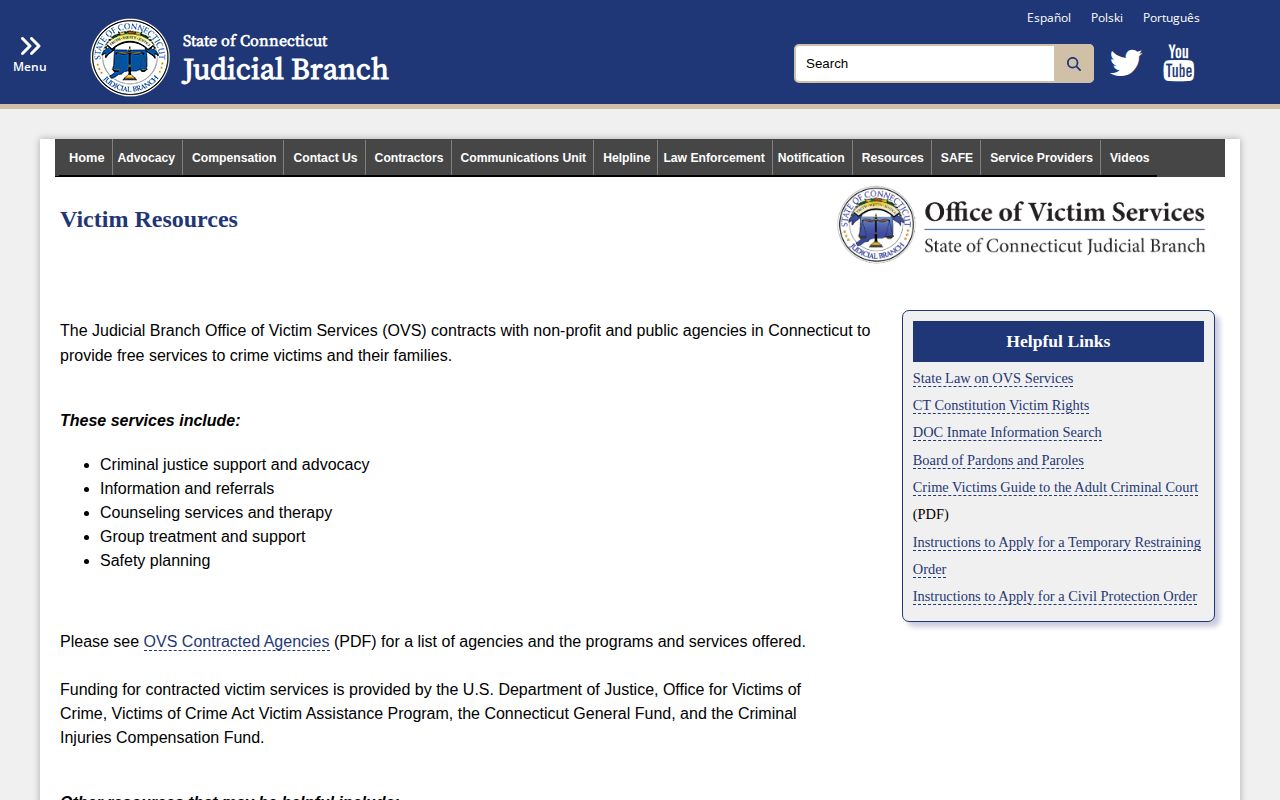
This source distinguishes victim notification from a general list of recent arrests.
Check a New Haven Arrest
Start with exact identifying details. The official guide allows a search by first and last name, inmate ID, or docket number. A docket number points to a court case. An inmate ID points to a DOC custody record. Neither matches a Milford Police incident number, and a name-only result can describe more than one person.
- Open Connecticut in VINELink and choose a person or court-case search.
- Enter the full name, inmate ID, or docket number exactly as known.
- Compare possible matches by court, custody agency, location, and available identifiers.
- Open the matching record and read its status and last update.
- If no match appears, check Milford Police Records, the court, or DOC according to the person's stage.
The New Haven County recent arrests hub explains which office owns each record. Police releases capture the initial charge. Court records show what happened after booking. Start any search at the Connecticut VINELink search screen.
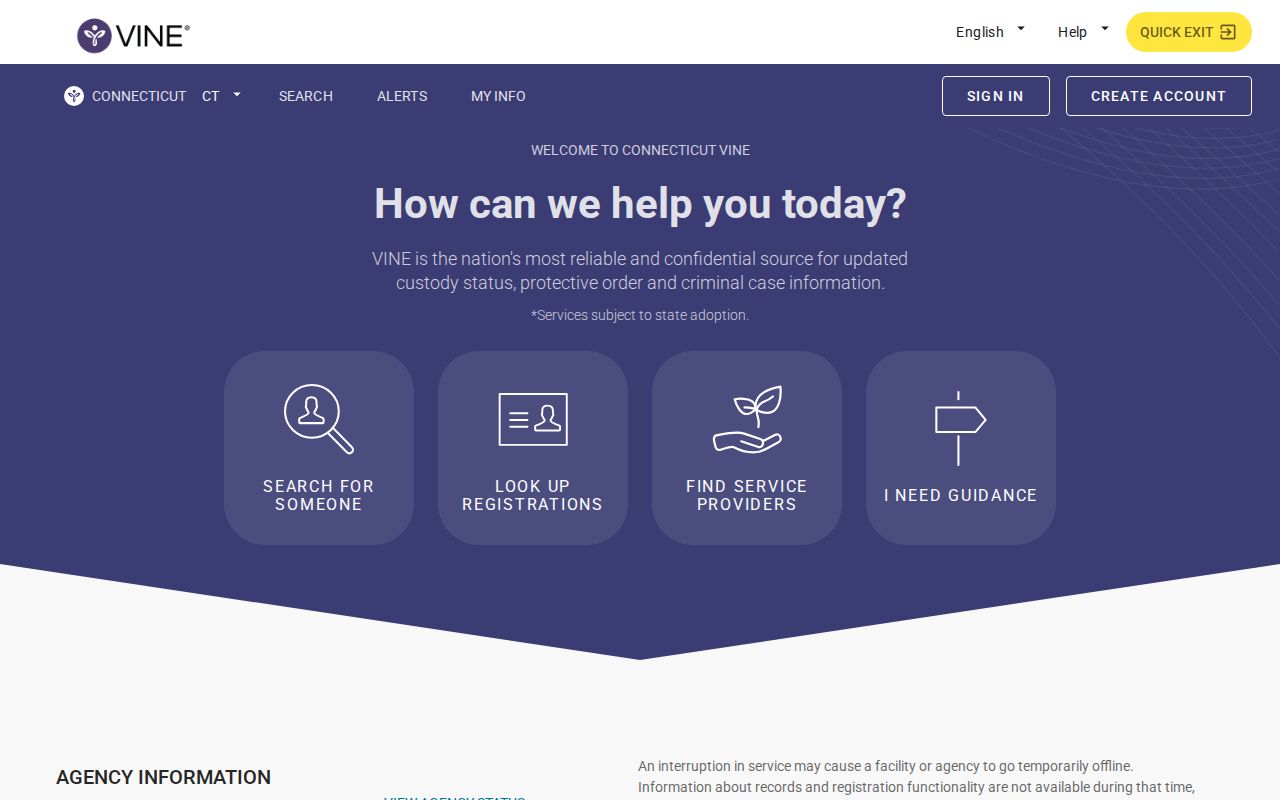
Use verified details and do not expose another person's result.
What VINELink Shows After an Arrest
A result can tie a person to an adult court case or a DOC event. Fields vary by stage. Location can change after transport, classification, release, or transfer.
| Field or event | How to read it |
|---|---|
| Name and identifier | Use an inmate ID or docket number to separate similar names. |
| Custody status | Status supplied by the participating court or DOC system. |
| Facility or agency | Current reported location, subject to change. |
| Court activity | Hearings, bail, probation, failure to appear, disposition, or sentencing. |
| DOC activity | Scheduled release, release, escape, return, transfer, or parole. |
Bridgeport Correctional Center serves the Milford Superior Court area and holds both pretrial and sentenced people. Not every Milford arrest ends up there. Some stay only briefly. Confirm any consequential status with DOC, the court clerk, or the agency that supplied it.
How to Register for Custody Alerts
Registration ties to one selected person, case, and event. Connecticut offers phone, email, text, mobile-app, and TTY notice. An account is optional for basic access, and phone or TTY sign-up uses a four-digit PIN to confirm receipt.
- Open the verified person or case record and select registration.
- Choose court or DOC events such as a hearing, transfer, release, or parole.
- Enter each phone number or email address that should receive notice.
- Create and retain the four-digit PIN when prompted.
- Complete confirmation and keep the inmate ID or docket number.
Call the 24-hour VINE line at 1-877-846-3428. TTY access is 1-866-847-1298. State material lists English, Polish, Portuguese, and Spanish, allows multiple phone numbers or email addresses, and urges keeping the PIN private.
VINELink Limits and How to Confirm
Connecticut VINE does not cover federal custody. A federal case may need the Bureau of Prisons locator, federal court, counsel, or a U.S. Marshals inquiry. DOC also excludes ICE holds from its public database. A blank VINE or DOC result cannot rule out federal or immigration detention.
Fresh Milford arrests can lag. VINE depends on court and correctional data, and Milford has no complete public 24-hour roster. The New Haven County 24 Hour Arrests process covers the police archive and the Records fallback. Milford Records can be reached at 203-874-4615.
VINE is not a history of every past booking. A police release can stay online after custody ends, while a VINE status tracks only the current event. Juvenile, erased, sealed, and protected information may be missing.
Court Alerts Versus DOC Alerts
Court and custody alerts answer different questions. Court alerts follow hearings, bail, probation, and sentencing. DOC alerts track release, transfer, escape, return, and parole. A disposition is the court's recorded outcome for a case. A police charge or custody status cannot reveal it.
Milford matters run through Superior Court GA22 in the Ansonia-Milford Judicial District. The lookup takes a defendant name, docket number, or schedule, and omits juvenile cases. Online court data is not the official record. Confirm a final outcome with the clerk.
When New Haven VINE Finds Nothing
A blank VINE screen is not the end of the search. It can mean many things. A municipal police department may have released the person before DOC custody ever began. The adult court record may not have reached the service yet, and names get entered differently. Sometimes the searcher holds a police report number while the system expects an inmate ID or docket number. Juvenile matters stay protected. So do certain other cases. None of that settles whether a Milford arrest happened.
Follow the record's path instead. For a Milford event, check the official police archive and ask Milford Records for an approximate date, a name, a location, and a report number if you have one. A release naming GA22 points to the Ansonia-Milford court schedule and docket information. If transport into state custody seems likely, try the Connecticut DOC inmate search. DOC updates that database daily. Even so, it can lag behind a person's current status, and it omits youthful-offender records along with people held for ICE.
Federal custody runs on a separate track. The Bureau of Prisons locator covers people in BOP custody, often from the earliest federal detention stage, and it is not a Milford booking-photo feed. U.S. Marshals pretrial custody may need confirmation through federal court, counsel, the U.S. Attorney, or the district Marshals office. Immigration detention uses the ICE locator. Don't blend these systems into one conclusion.
Responding to a Custody Alert
A custody alert is a prompt to verify, not a command to act. Write down the event first. Note the reported time, the person identifier, the agency, and any callback information. Then call the named court or correctional agency at its published number, and for a safety concern use an existing victim-services plan or local law enforcement. Never approach a person over a transfer or release message.
Notifications can run late. Agency data moves on its own clock. Contact details change too. Review registrations after a new inmate ID appears. Do the same when a case moves from court to DOC, or when a phone number or email address changes. VINE is free. The Judicial Branch's state service requires no payment.
Keep a separate record of your registration confirmation and the government source behind it. A phone alert may ask for your four-digit PIN; entering it confirms receipt only. It does not verify any court outcome. Check email and text notices against the official record named in the message. A changed facility can reflect transport or classification. That shift alone signals no new charge.
For Milford cases, the useful order is police record, court record, then custody record. Each source has a narrow job. Keeping those jobs separate keeps a planned release from looking like a completed one.