
New Haven County Arrest Log
Milford Police posts its primary multi-day source in an official press-release archive of dated PDFs. There is no fixed 72-hour results page. One PDF may bundle several arrests. It can also hold a served warrant or an investigation that started weeks earlier. The department itself warns the material is not inclusive of recent events or arrests. That warning is context, not filler. Publishing spans shift from document to document. A release can describe a Milford arrest made on an earlier date. A news blotter can merge releases into a longer range. The city sets no stated archive depth, fixed weekday schedule, or photo rule. Multi-day reading means working backward through release dates. It also means checking the internal event date in each file.
Read New Haven Arrest Dates
Chronology beats any headline range. Begin at the city archive, treat secondary outlets as discovery aids, then return to the official PDF or request the police record. A later DOC admission date shows entry into state custody, not the day Milford made the arrest.
- Choose an approximate incident or arrest range and scan Milford’s archive by release date.
- Open each likely PDF. Record the release date, incident date, arrest date, and report number separately.
- Compare the charge wording, bond terms, and court destination with the originating police document.
- Check the Judicial Branch docket for later dates and disposition. The online display is not the official court record, so ask the clerk when exact status matters.
- Request the underlying record from Milford Police when the archive has a gap or the PDF is no longer public.
For something believed to have happened today, the 24 Hour Arrests page offers the same-day confirmation chain. It supplements, not replaces, the wider archive method.
New Haven Arrest Log Fields
Fields differ across official PDFs and news summaries. Milford releases carry the deepest agency case detail. Patch tends to compress age, municipality, alleged conduct, charges, release terms, and court date into one line. The Milford Times ties its summaries to a police daily release. Neither outlet owns the record.
| Field | Reading rule |
|---|---|
| Report or case number | Use the Milford identifier to seek the original record. |
| Incident and arrest dates | Keep them distinct from the PDF publication date. |
| Person and municipality | Confirm spelling and identity with more than a name. |
| Alleged charges | Read as charges at that stage, not findings. |
| Bond or release terms | These do not state that a person remains in custody. |
| Court and date | Check for continuances and the final disposition. |
| Photograph | May be release-specific; no complete official gallery exists. |
A narrative can name the officer or detective, the incident location, and the sequence police allege. Those details are still an early account. Keep words like "charged" and "alleged" when quoting or summarizing.
Milford Arrest Blotter Patterns
Local reporting builds the most familiar multi-day blotter, but it follows the official police material. Milford Patch Crime & Safety runs recurring arrest-log articles spanning a day, several days, or more than a week. A 2026 article credits Milford Police as its source. That credit tells you where the record began.
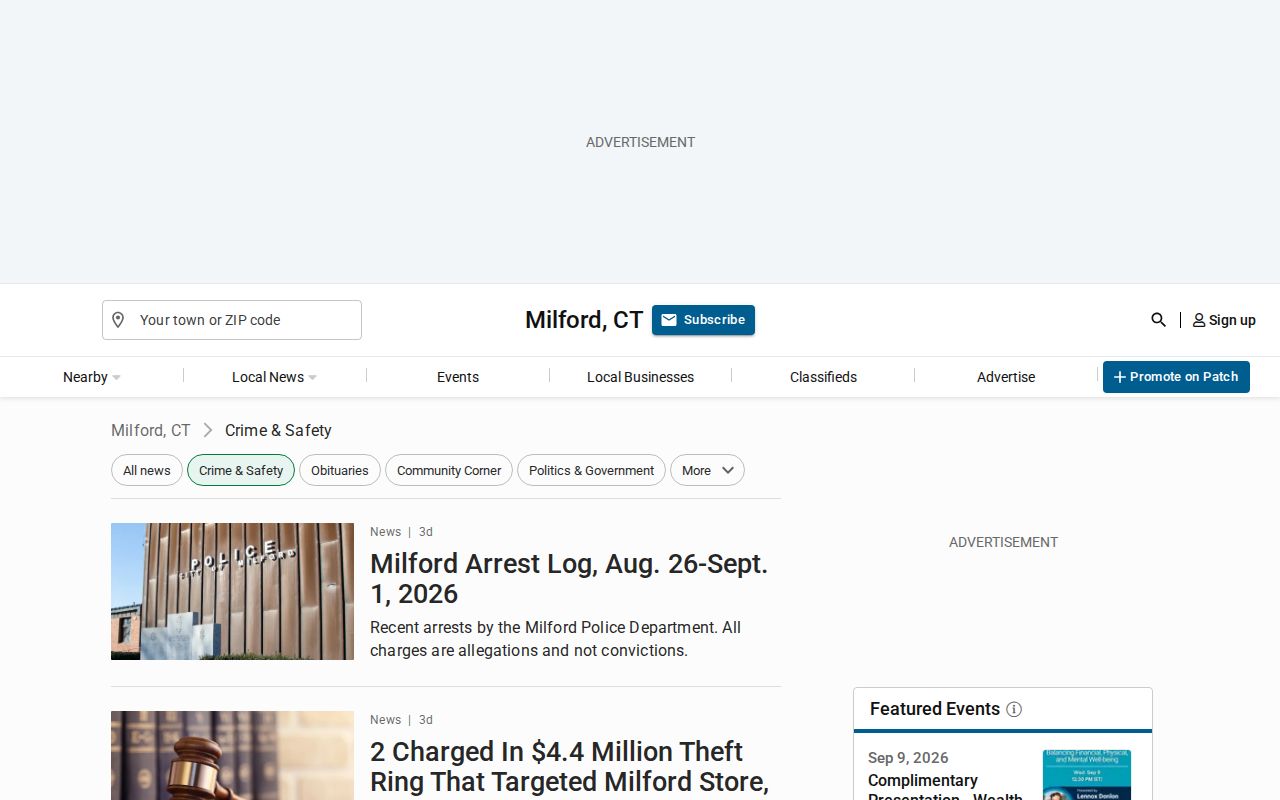
The news index helps you find a date-range story. Its selection and timing do not equal complete police coverage. The Milford Times community section also posts police-blotter summaries drawn from department releases.

That outlet is a second discovery route. Confirm each entry with Milford Police or the court, since summaries can drop fields and do not show present custody.
Why New Haven Arrest Dates Differ
Warrant cases make dates tricky. Police investigate an incident, obtain a warrant, then serve it days or months later. The person might surrender or arrive from another jurisdiction. The case lands at Milford Court. The release itself can post after the arrest, so treating its archive date as the booking date distorts the record.
- Incident date
- When the reported event allegedly occurred.
- Arrest date
- When police took the person into custody or served the process.
- Release date
- When police published the PDF, not necessarily when custody ended.
- Admission date
- When DOC received a person into state custody, if that occurred.
- Disposition
- The court’s resolution of the charge, separate from the blotter.
Bond can mean a set amount, a promise to appear, or other terms named in a release. It does not fix the moment someone physically left custody. Current status belongs to DOC, VINE, the court, or the arresting agency, depending on the stage.
New Haven Arrest Log Archives
The city publishes no rule for how long an arrest PDF stays online. An item can roll off a latest-news screen yet remain in the CivicEngage archive. If it vanishes, the municipal record may still exist. Web publication and legal retention are different lifetimes. Connecticut's M7 municipal public-safety schedule generally keeps non-death case-investigation records for at least ten years from the reported date. That retention is subject to disposition approval and case status. Death-related investigations are permanent. Individual identification records include photos and fingerprints. They follow the life of the case file and specific statutes. Erased, juvenile, sealed, or protected material carries its own access limits. The Connecticut State Library retention program explains the schedules municipalities use.
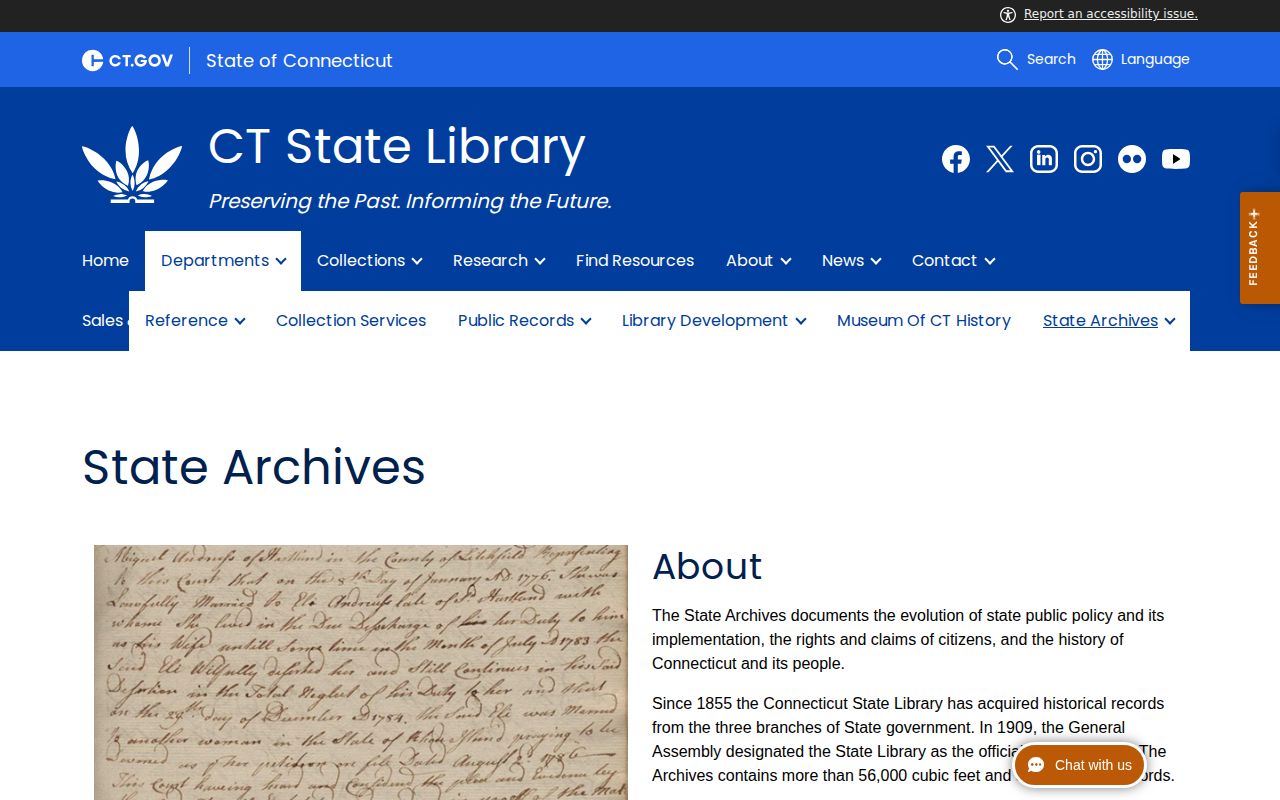
These schedules give records context only. They are not a current arrest index and do not prove any specific Milford file was transferred there.
Request Older Milford Arrest Records
The Records Division of the Milford Police Department handles anything beyond the online archive. Its desk sits at 430 Boston Post Road, Milford, CT 06460. Reach it at 203-874-4615. Email goes to Records@MilfordCT.gov. Administrative hours run Monday through Friday, 9 a.m. to 3 p.m., subject to manpower, and requests are handled in the order received. No fixed response date is promised.
Spell out the municipality, the rough date range, the person's name, the record type, and any report number. Ask for the official record, not a news copy. Milford charges $0.50 per page. Estimates above $10 may require advance payment. Connecticut FOI permits a plain written request, so the city form is optional. Withholding still applies for active investigations, juveniles, protected people, sealed cases, or erasure.
Retention rules can keep old files offline. A news copy can linger after an official source changes. Check the police file first. Then confirm the court outcome. The county-wide recent-arrests overview maps the separate DOC and court paths.
Arrest Logs Stop Before Disposition
An arrest log marks the very start of a case. It stops there. Charges can later be changed, dropped, nolled, or erased. That happens once the court takes over. For what happened next, the docket, not the blotter, is the place to look.
Start with official sources. News coverage can still help. Connecticut Post stories chase events, though, and county-labeled commercial pages are unofficial and often stale. Nothing outside can turn a thin police archive into a complete New Haven County roster.